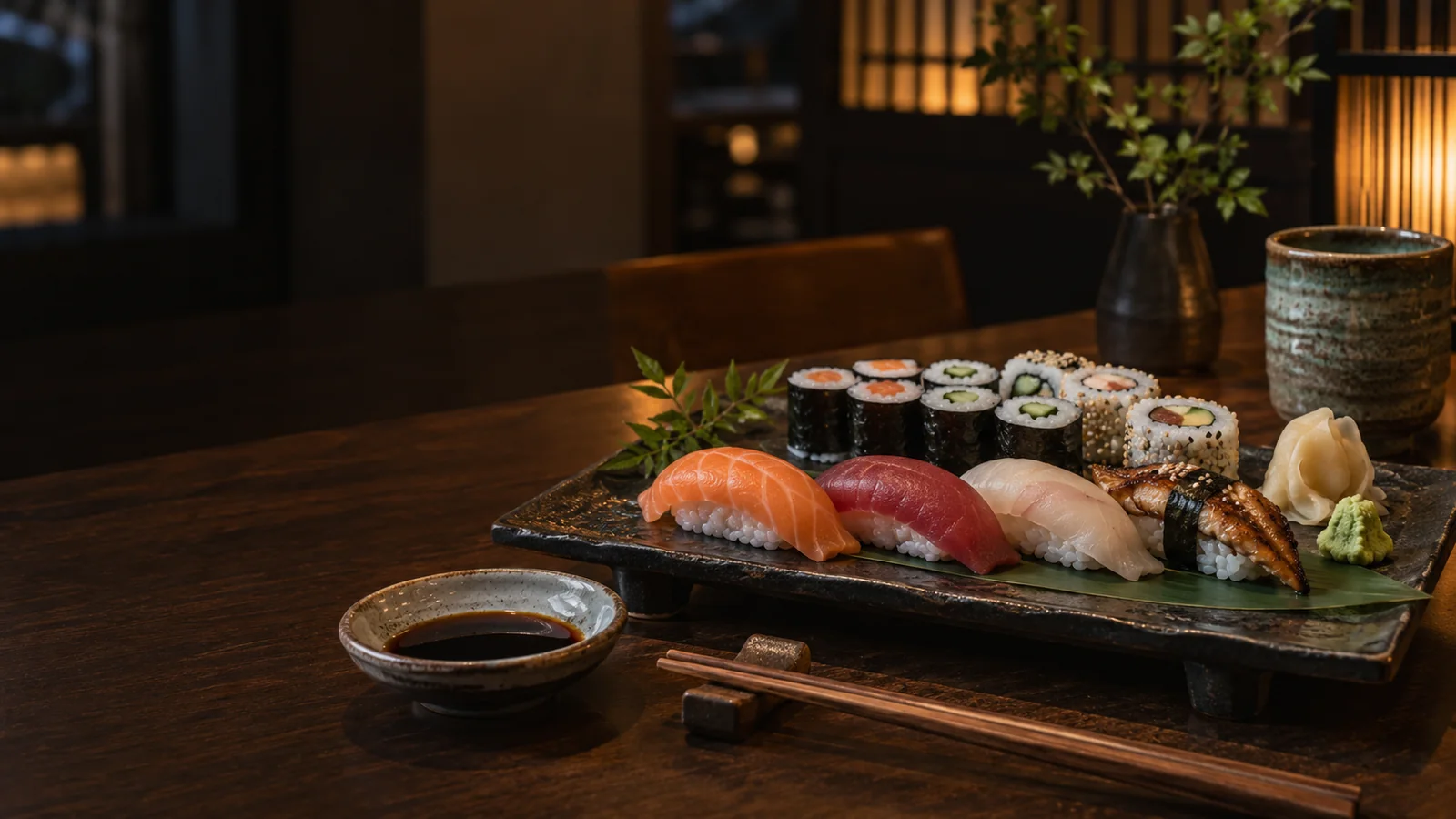
For most people Japanese food in Yerevan starts and ends with delivery rolls, and that's a shame. There are dozens of Japanese restaurants in the city, from simple sushi bars to concept ramen spots. Sushi is made almost everywhere, but beyond the set boxes there's ramen on a long-simmered broth, gyoza, udon, and poke worth coming in for. This text isn't about specific venues but about what to order, how to tell fresh sushi, and which format to pick for the occasion. If you're new in the city, keep it as a guide.
Sushi and rolls: delivery and dine-in
Sushi and rolls are the clearest entry into Japanese food and the most popular delivery format in Yerevan. Most items here come with salmon, eel, and other seafood. Ready-made sets are handy to take home for a group, coming out cheap and predictable. Dine-in, look wider than the boxes: classic nigiri, gunkan, temaki, and sashimi are often tastier than baked rolls under mayo sauce.
If you order sushi for delivery, choose places with fast logistics and order at the hours when the kitchen is busy and the fish is fresh, that is at lunch and in the evening rather than the lull between them. Complex rolls with lots of sauces survive the trip worse than simple ones, worth keeping in mind.
What to order besides sushi
The most interesting part of Japanese food in Yerevan starts beyond the rolls. Ramen is a noodle soup on a broth simmered for hours, rich and filling, a reason of its own to come in. Gyoza, dumplings fried until crisp, go well with it. It's worth trying udon (thick noodles), tempura in batter, poke bowls, and teriyaki chicken.
Among the rolls and sets in Yerevan it's easy to find items with shrimp, eel, and roe, not just salmon, so the choice of Japanese dishes is wider than the standard. The cuisine suits vegetarians too: vegetable rolls, miso soup, chuka salad, poke without fish, and noodles without meat. If you want an authentic experience, look for places with sashimi and chef sets, not only the usual rolls menu.
How to tell sushi is fresh
Freshness is the main thing in sushi, and you can judge it before the first order. A good sign is high foot traffic: the fish doesn't sit, it moves fast. Dine-in, pay attention to the smell (it shouldn't smell sharply of fish) and the rice (it should be slightly warm and firm, not falling apart).
For delivery, go by reviews on freshness and how far it travels: the closer the kitchen, the better the fish arrives. Places that specialize in Japanese food are usually more reliable on freshness than general Asian restaurants with sushi added to a big menu.
How much it costs
Japanese food in Yerevan is more affordable than it seems, especially for delivery. Budgets are approximate; for exact prices check the venue's card on dish.am, they change.
| Format | What people get | Average check for two |
|---|---|---|
| Delivery sets | rolls, basic noodles | 4–5k ֏ |
| Sushi bar dine-in | sushi, rolls, miso, chuka | 5–7k ֏ |
| Ramen and hot dishes | ramen, gyoza, udon | 6–8k ֏ |
| Premium and omakase | sashimi, nigiri, chef sets | 9–12k ֏ |
Eating sushi for two is realistic around 5k ֏, while omakase with chef sets and sake lands at the upper end of the range. If the goal is to keep it cheap, take delivery sets or the lunch offer at a sushi bar.
Which format to pick for the occasion
For a quick dinner at home, delivery sets work. If you want to sit down, choose a sushi bar or a ramen spot in the center. For a date, a premium lounge with sashimi, nigiri, and sake is better: quieter, the plating is neater, and omakase turns dinner into a small event.
If you'd rather not choose blindly, describe your request in words or by voice in dish.am (for example "a Japanese restaurant with ramen in the center, dinner for two" or "fresh sushi with delivery nearby"), and the service finds an option by format, district, and budget. The list is unbiased: restaurants don't pay for a spot in it.