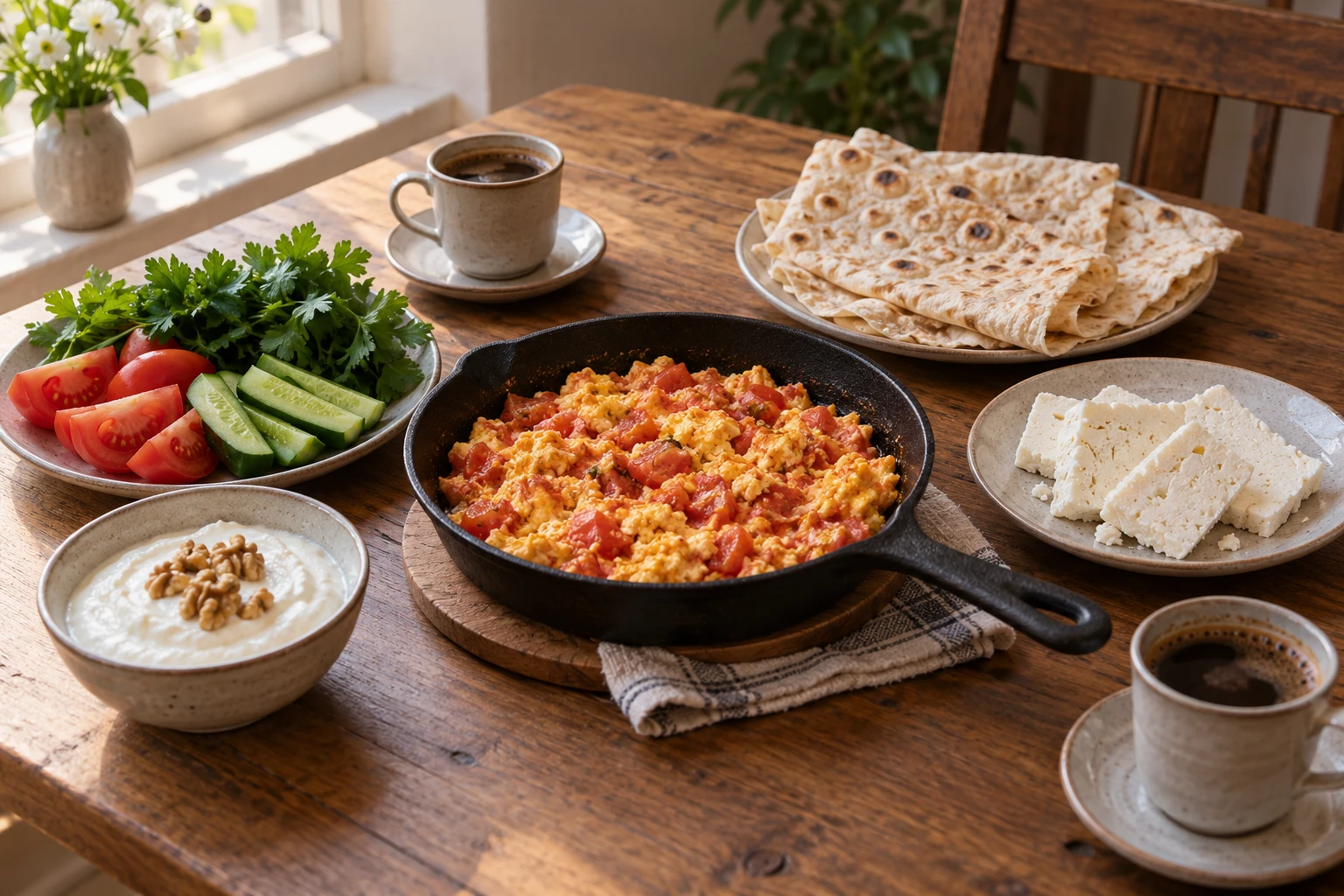
Cheese and herbs wrapped in lavash, hot eggs with tomatoes, a spoonful of matsun and coffee: Armenian breakfast is easy to explore through combinations. Start with a small order, then add whatever you want more of: a hot dish, vegetables or something sweet.
The most interesting differences appear in the ingredients. Eggs with basturma can be a hot dish on their own or a breakfast with potatoes. Strained matsun might be a cold appetiser with walnuts or an ingredient in eggs with honey. We compared these differences in the menus saved on Dish.am and put together morning meal options for a first introduction to Armenian food.
For your first order:
- For a hot dish without meat, choose eggs with tomatoes and bread.
- To explore the cold part of the table, order lavash, cheese, herbs and fresh vegetables.
- Choose matsun according to its serving: plain, with walnuts or as part of a hot dish.
- For a group, share the cold plates and let each person choose the additions to their eggs.
What makes up a traditional Armenian breakfast
Armenia has no single compulsory morning set. Lavash, cheeses, eggs, cucumbers, tomatoes, herbs and fermented dairy products provide a starting point you can adjust to your appetite. Basturma, honey and preserves can complement the table, but you do not have to order all of them at once.
This kind of breakfast lets you alternate flavours. Wrap cheese and a few herbs in thin lavash, then eat the next bite with a fresh tomato. Keep the hot eggs on a separate plate so their sauce does not soak all your bread before you eat it. If you want to try matsun, start without anything sweet, then add honey if you like.
To choose a place by cuisine, browse Armenian restaurants in Yerevan. For a morning visit, check breakfast service and the dish you want separately.
Modern Armenian breakfasts may also include familiar porridge, omelettes or pastries. This is a useful way to explore local ingredients gradually: keep a familiar hot dish and add cheese with lavash. The dish you choose matters more than the name of the set.
What Dish.am menus show: similar names, different orders
The table compares specific options from menus in the Dish.am database. It is an ingredient comparison, not a ranking of venues or a promise of identical servings in every restaurant. The ingredients show where an order changes character and which extra plates might repeat something you have already chosen.
| Dish and where to see the menu | Ingredients listed | What this changes when ordering |
|---|---|---|
| Eggs with tomatoes Lavash Restaurant |
Egg, tomato and butter; some descriptions also list spices | You can start with a hot dish without meat and try cheese separately |
| Eggs with tomatoes, served with flatbread Loona Yerevan |
Eggs, tomatoes, chilli and butter; served with oven-baked flatbread | There is a spicy addition, and bread is already part of the serving |
| Eggs with basturma Lavash Restaurant |
Basturma, egg and butter; sometimes spices | Meat is already in the hot dish, so a separate meat appetiser is an optional extra |
| Rustic eggs with basturma JAM Cafe |
The description lists basturma and fried potatoes | This differs from eggs with just one meat addition |
| Strained matsun Lavash Restaurant; Tavern Yerevan |
One version lists walnuts; another also lists pomegranate | The same name can come with different additions; it does not necessarily mean plain matsun |
| Eggs with strained matsun and honey Lavash Restaurant |
Strained matsun, egg, honey and spices | Matsun is part of a hot dish with a sweet addition, rather than a separate cold plate |
The links below the dish names open the relevant menu sections. To compare more places, browse eggs and omelettes and matsun: these collections show matching items and prices from collected menus. English menus may label the same egg dish as an omelette.
The main lesson is to look at the additions and serving, rather than only the words “eggs” or “matsun”. Chilli changes the heat, potatoes add a side and flatbread answers the question about bread. A breakfast you enjoy comes from matching these differences to your appetite and preferences.
There is also an example in the opposite direction. One item called “Armenian breakfast” in a saved menu has only a general description, without a list of ingredients. That entry does not tell you whether eggs, cheese or matsun will arrive. Choose a set after checking what it contains; individual dishes make it easier to see exactly what you have ordered.
Lavash, cheese and herbs: put together your first bite
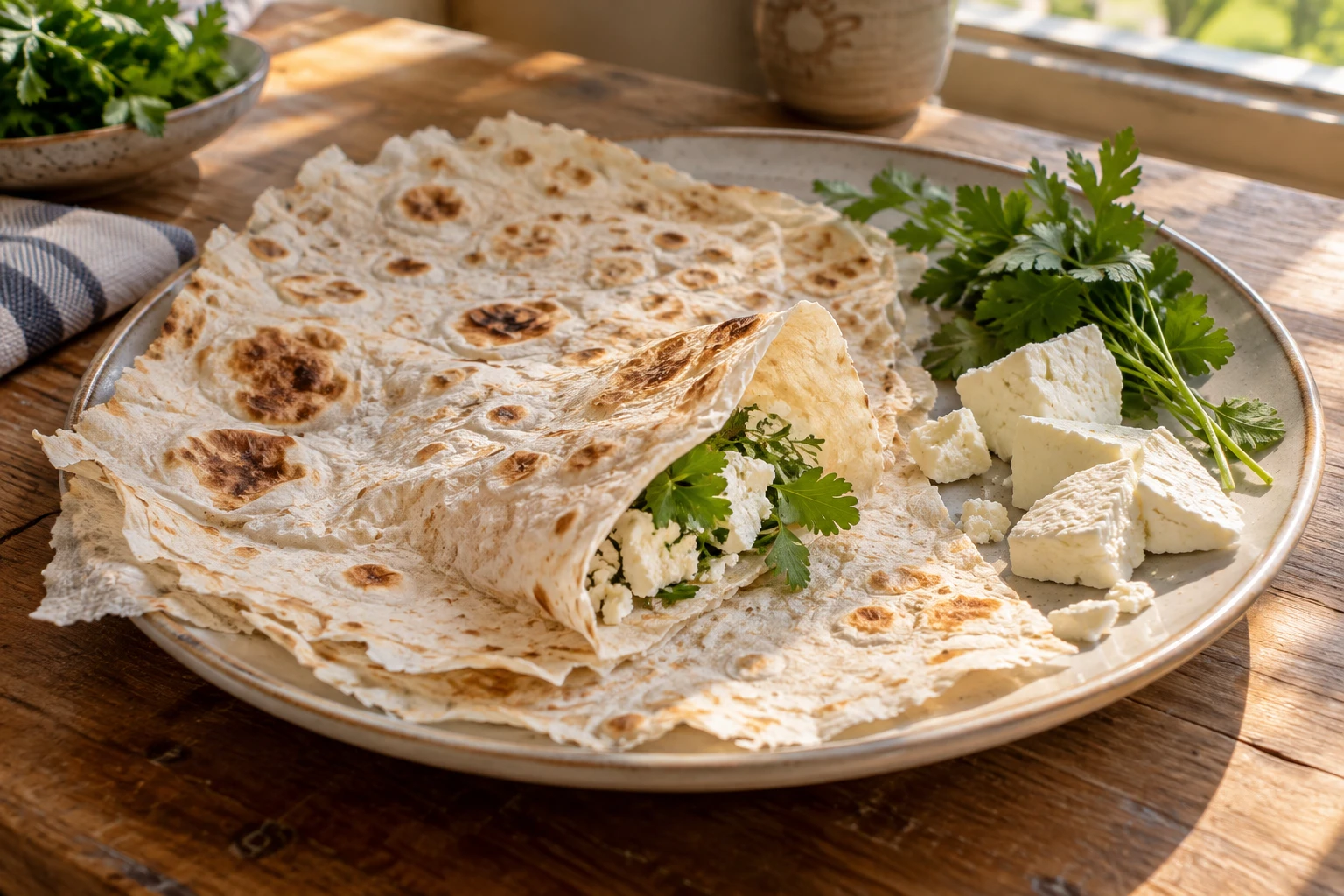
Lavash works well for small combinations. Tear off a piece, add cheese and your chosen herbs, then wrap it loosely without packing in too much filling. Try the ingredients together, then change the combination in your next bite.
If there are several cheeses on the table, try each on its own first. Then pair your favourite with herbs and bread. Saltiness depends on the particular cheese, so there is no need to salt the vegetables in advance if you plan to eat them together.
A vegetable plate and a salad serve different purposes. Separate cucumber, tomato and herbs leave the combination up to you. A salad already has its own dressing and ingredients. Individual ingredients are convenient when you first try cheese with lavash; if you want a prepared vegetable dish, choose a salad by its description.
The Lavash Restaurant menu lists a Farm Cheese Platter with chanakh, lori, horats and suluguni. Fresh greens, a vegetable platter and bread are separate items. You can use these to put together the cold part of the table; check the type of bread and portion sizes when ordering.
When ordering a set and bread separately, check one detail: whether lavash is already included. The same applies to flatbread served with eggs. You can order extra bread, but it helps to make that choice deliberately.
Matsun: first decide what kind of breakfast you want
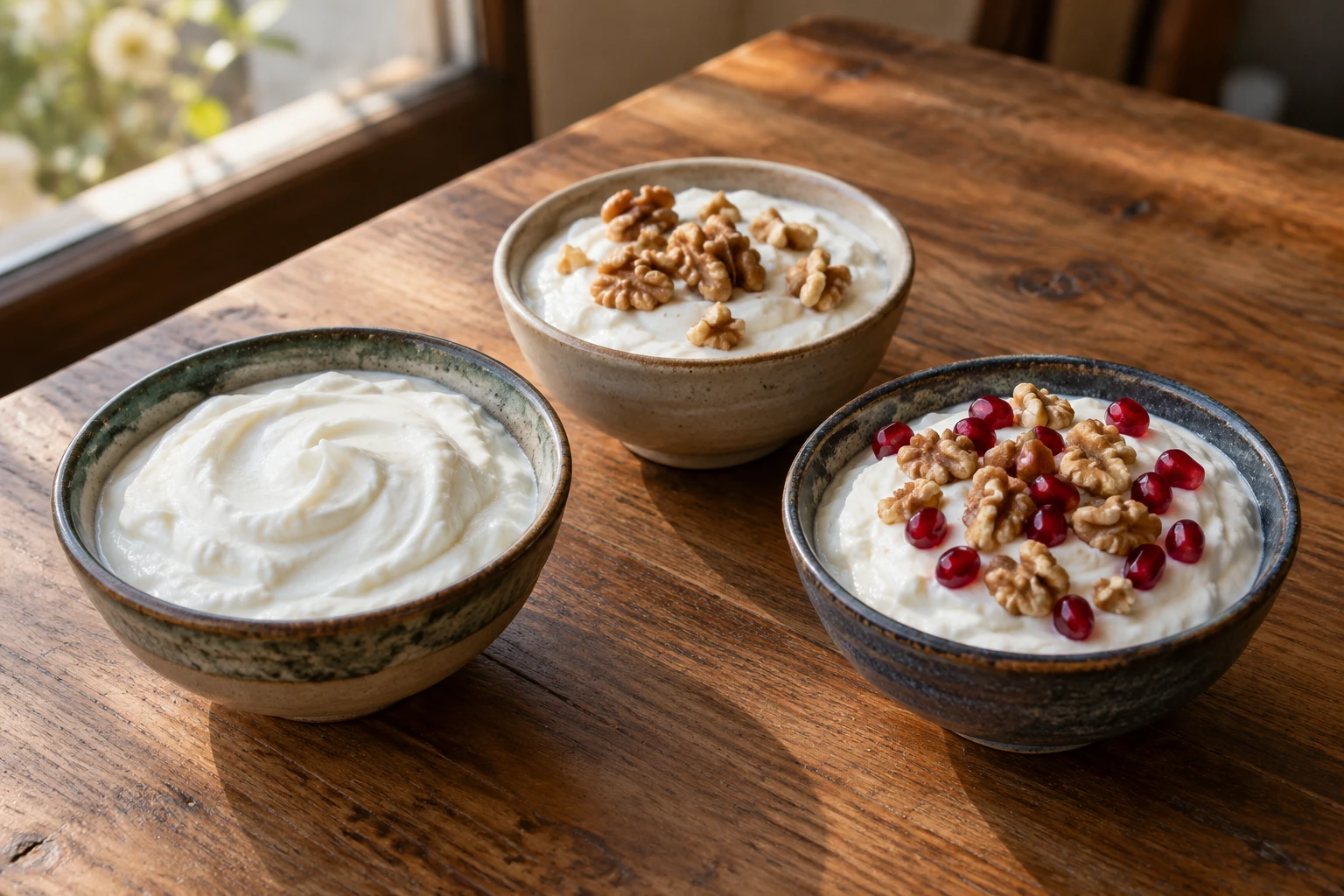
Matsun is a fermented dairy product. On a menu, distinguish it from a dish made with it. Strained matsun comes with additions, while the combination with eggs and honey is a different menu item.
To explore the flavour of the product itself, choose it plain if that option is available. You can add walnuts, honey or preserves afterwards. If you want a breakfast with a more pronounced sweet element, choose a combination whose ingredients appeal to you.
For a savoury option, see the Sherep Restaurant menu: its strained matsun with cucumber lists garlic and dill. Compare other servings in the matsun collection.
Two differences in the menus are useful here: walnuts do not imply honey, and honey in the name does not imply a separate dessert. In the egg dish we examined, honey is an ingredient alongside egg and matsun. You do not automatically need another serving of matsun if your aim was simply to try that ingredient.
Eggs with tomatoes, basturma or an omelette: choosing a hot dish
With tomatoes. Choose this when you want eggs with vegetables and no meat. The saved ingredient lists include butter, so leaving out basturma does not make the dish entirely plant-based. The version with chilli has a spicy ingredient; if you prefer a milder flavour, check the description of the particular egg dish.
With basturma. An option for anyone who wants meat in the hot dish itself. You could add fresh vegetables and bread, leaving a separate meat plate for another time. The rustic version in our comparison includes potatoes, making it a different order from eggs with basturma without a side.
An omelette. Choose this if you prefer eggs prepared that way. Check the filling separately: the word “Armenian” does not reveal every ingredient or guarantee an identical recipe. For a first introduction, clear ingredients are more useful than an impressive name.
If you want a filling breakfast before a trip, start with a hot dish and check what comes with it. Bread, cheese, potatoes and vegetables may be included or listed separately. Add what you feel is missing, rather than ordering a full range of appetisers out of habit.
Ordering for two: shared ingredients and different hot dishes
Imagine one person wants eggs with tomatoes and the other wants basturma. Each can order their own hot dish, with lavash, cheese and vegetables in the middle of the table. Both can try the shared ingredients while keeping their own choice of main dish.
If one person wants only the cold part of the meal, a shared order can still work: they can put together lavash with cheese and herbs while the other has a hot dish. Add matsun with something sweet separately once you know who wants it.
The ordering sequence is simple:
- Choose a hot dish for each person who wants one.
- Check whether bread and a side are included.
- Add shared cheese and vegetables without unnecessary repeats.
- Choose matsun or something sweet if you want it.
This is a guide to combinations, not a portion calculation. The size of a shared plate depends on the menu; its name alone cannot guarantee that it will feed two people.
Coffee, sweets and khash: choices to make separately
Tea or coffee completes the morning table. If you want coffee brewed in a cezve, specify the preparation method when ordering. Honey and preserves can accompany your drink or matsun, but something sweet in a set does not mean a drink is included too.
Plan khash as a separate morning meal. It is associated with early gatherings in the colder season and is not a required addition to eggs, cheese and vegetables. If you specifically want to try it, ask in advance about availability and serving times.
The Kamancha menu marks khash as seasonal. Compare it with other venues in the Yerevan khash collection; a saved menu entry does not confirm availability on your chosen date.
Where to try Armenian breakfast in Yerevan
Here are four places from the comparison above. Venue names open their profile pages, while menu links take you to the relevant dishes:
- Lavash Restaurant, 21 Tumanyan Street. Its breakfast section lists eggs with tomatoes, basturma, or strained matsun and honey, labelled as omelettes in the English menu. Compare several combinations in one place.
- Tavern Yerevan at 5 Amiryan Street. Tomato and basturma egg dishes are in the omelette section; matsun with walnuts and pomegranate is in appetisers. This refers to this specific branch.
- Loona Yerevan, 41 Isahakyan Street. Its breakfast menu describes eggs with tomatoes, chilli and oven-baked flatbread.
- JAM Cafe, 41 Pushkin Street. Its breakfast section lists country-style eggs with basturma and potatoes.
Once you know what you want to order, browse places for breakfast in Yerevan on Dish.am. Open a venue's menu and compare its specific serving with what you want to try. If you are comparing Lavash and Tavern Yerevan for lunch or dinner, see the restaurant ranking for Yerevan.
Look for ingredient names in the descriptions: tomatoes, basturma, matsun and lavash. In the database, egg dishes appear not only in breakfast sections but also among hot dishes or sides. This can help you find the item, although its menu section alone does not confirm when it is served.
For a later morning meal, browse brunch places too.
Database information can change. Before visiting, check that the dish is available and confirm breakfast hours. You can already describe your order precisely: “Eggs with tomatoes, cheese and vegetables to share; bread if it is not included in the serving.”
Two questions that change what goes on the table
Can you put together an Armenian breakfast without meat?
Yes: lavash, cheese or matsun that suits you, vegetables and eggs without meat. An entirely plant-based version also excludes eggs and dairy. Check how hot dishes are prepared, because the egg dishes we examined list butter.
Are matsun and lavash already included in an Armenian set?
That depends on the particular set. The name “Armenian breakfast” is not a substitute for a list of ingredients. If the contents are not listed, ask before ordering. If they are listed, compare them with the separate dishes to avoid ordering the same things twice.
Armenian food offers plenty of options for a morning table. For a first introduction, choose a hot dish with clear ingredients and a few products you want to combine yourself. Lavash with cheese and herbs, eggs with tomatoes or matsun with walnuts give different impressions; there is no need to try the whole range in one morning.